KAERI News
- 작성일
- 2026.11.13
- 조회수
- 78
KAERI Hosts IAEA SMR School in Korea
Five days of technical dialogue on SMR design, safety, regulation and deployment
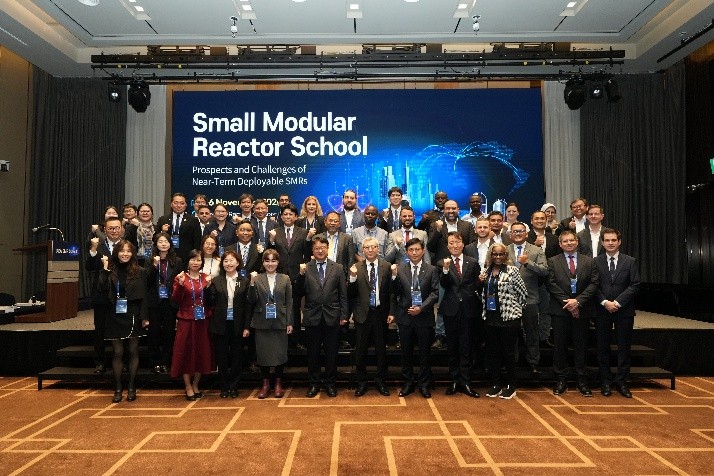
How would engineers inspect components inside a compact reactor? How many operators would several modules need? These were among the questions experts from 14 countries explored at the IAEA SMR School, held in Korea from November 2 to 6, 2026.
Organized by the International Atomic Energy Agency (IAEA), hosted by the Korea Atomic Energy Research Institute (KAERI) and supported by i-SMR Development Agency, the event brought IAEA experts, SMR developers, regulators and international participants together for direct technical exchange.
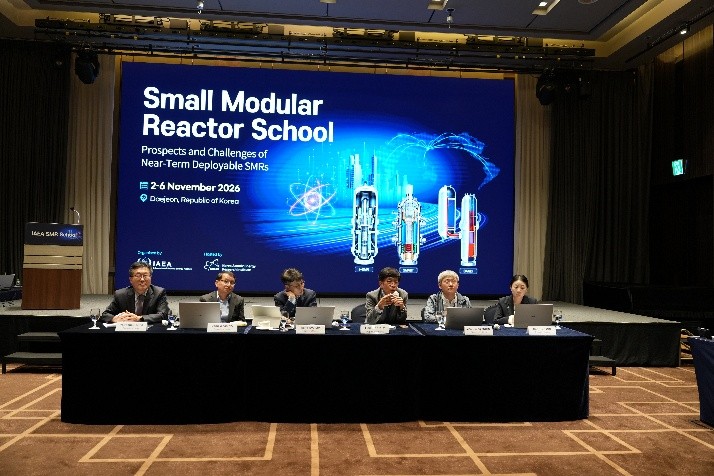
Developers responded to questions.
Each i-SMR, BANDI and SMART developer session included 90 minutes of questions and answers. The panel format encouraged follow-up questions and discussion across specialties. Opening exchanges on national policy and supply chains, alongside IAEA discussions of economics, safety, nuclear security and safeguards, placed the designs in a wider deployment context.
For i-SMR, discussion reached into component inspection, control-room staffing for multiple modules and the reliability of early cost estimates. Developers explained inspection approaches and the importance of experience from the first domestic project. Staffing remained under regulatory review and discussion at the time.
BANDI brought a different setting into view: the sea. Participants asked how ship motion and inclination could affect safety systems that relied on gravity and natural circulation. KEPCO E&C discussed additional testing under marine conditions and questions arising from different reactor and vessel lifetimes.
SMART focused attention on the evidence behind the design. KAERI’s team explained how component tests, integral-effect tests and accident analyses supported passive safety verification for SMART100. Participants also examined grid compatibility, fuel supply and operational readiness.
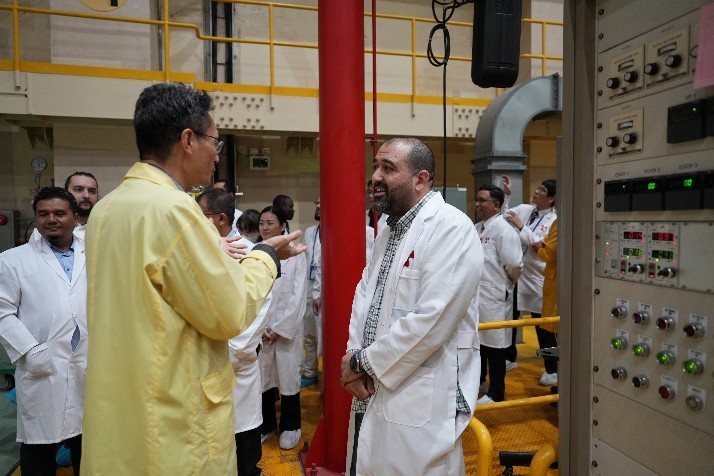
Dialogue continued during a KAERI facility visit.
Regulatory dialogue added another perspective. In Seoul, Korea’s Nuclear Safety and Security Commission (NSSC) and Korea Institute of Nuclear Safety (KINS) shared their approaches to new designs and i-SMR review experience. Questions covered evidence at different licensing stages, independent verification of safety analysis codes and licensing for multiple modules. How operating licenses would be issued across modules remained undecided at the time. These exchanges helped participants distinguish development targets from the evidence regulators needed to assess them. Hyundai Engineering & Construction also connected technology choice with demand, construction schedules, maturity and licensing status.
Technical visits carried the dialogue beyond the meeting room. At KAERI’s research and test facilities, participants met facility specialists and connected design and safety discussions with research in practice. Doosan Enerbility’s factory visit linked supply-chain discussions with manufacturing capabilities. The Future Energy Pavilion of Korea Hydro & Nuclear Power (KHNP) in Gyeongju added the energy operator’s perspective.
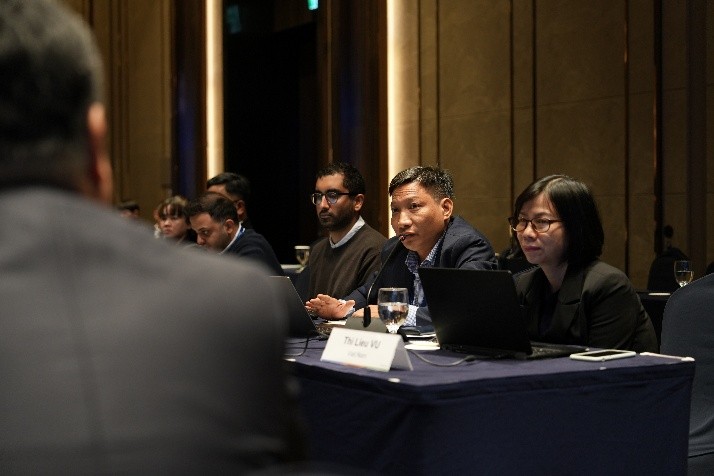
A participant contributed to the discussion.
In Gyeongju, the conversation found a different backdrop. Visits to Cheonmachong Tomb and Gyeongju National Museum introduced participants to a city that served as the Silla capital for nearly a millennium. Walking among the tombs and sharing meals offered time to get to know colleagues beyond their professional roles.
The program drew on cooperation among the IAEA, KAERI, government bodies, iSMRDA, KEPCO E&C, NSSC, KINS, Doosan Enerbility, KHNP and Hyundai Engineering & Construction. Their contributions connected technical expertise with the questions countries faced as they considered SMR deployment.
Across five days, participants compared three Korean SMR developer’s programs, examined issues requiring further evidence and met the organizations behind research, manufacturing and operation. The week’s discussions and professional connections laid a practical foundation for further technical cooperation.